After our time in Takoradi and Busua, we went to village called Ashiabre for a week with our dear friend Paul, his brother-in-law, and another of his friends from Sierra Leone. We met several amazing people who lived in that village and have a strong desire to return in the future.
After that trip, the REACH 4 Ghana team arrived and we undertook our mission to serve five villages in the Volta Region. The update from that trip can be found at the R4G blog:
Week 1
Week 2
Week 3
Thanks to everyone who supported our 2011 Ghana trip. Praise God for His faithfulness!
Tuesday, April 17, 2012
Wednesday, July 6, 2011
Ghana 2011
Week One: Takoradi and Busua
After arriving in Ghana on June 4th, we stayed in the capital city of Accra for a few days, catching up with friends and making some preparations for the REACH 4 Ghana team. In Accra we were graciously hosted by the family of Albert Duah - our classmate, REACH 4 Ghana co-leader, and dear friend. We enjoyed plenty of delicious food, comfortable accommodations, and transportation thanks to his Aunt Mary and his multitude of siblings and cousins.
Due to unforeseen circumstances, we had to cancel/postpone our trip to Sierra Leone. We decided to use this unexpected free time to explore a new place try to relax in Ghana! So, on Tuesday, June 7th we set off on an adventure to the best swimming beaches in Ghana - a journey to the Western Region that took us to Busua by way of Takoradi.
Busua was a small fishing community that received more tourist traffic than the other parts of Ghana we have visited. There we had a restful and memorable time. However, we found choosing where to eat or buy souvenirs to be a seriously dramatic affair in such a small community and without a native traveling companion to give us clout. Our decision to eat at a particular restaurant or shop at one booth versus another incited the jealousy of other vendors! After a heart-wrenching day of trying to please everyone, Jeremy declared, “I’m not playing these emotional games anymore!”
We decided to retreat and just eat the hotel food. Unfortunately, that night Jeremy got sick! Vomiting and mild diarrhea only lasted 24 hours, praise God, but I (Alli) think that night was one of longest of my life. We were already scheduled to catch a taxi at 4 am the next day to travel back to Accra. As the hours passed from 11pm, I debated whether or not to take a taxi immediately to be nearer to a clinic or hospital should Jeremy get worse. Jeremy assured me he would be fine, but I continued to pray that I wouldn’t regret not making the move while taxis were still available. He made it and we made it to the bus the following morning to be back in Accra by 10:30 am. Other than some mild GI symptoms here and there, we’ve been in good health. Thanks for your continued prayers!
Week Two: Ashiabre
Week Three: First Week with the REACH 4 Ghana Team
Week Four: More Rural Outreaches and a Trip to Accra
Week Five: Akpafu Todzi and Cape Coast


Monday, November 22, 2010
Ghana Pictures . . . finally!
So medical school, yeah. We’re busy of course, but we’ve finally put up an album for the Ghana 2010 pictures in Alli’s picasa account. It’s always a joy to go back and be reminded of the relationships we’ve formed and the experiences we’ve had there. Take a look!

Saturday, August 21, 2010
Ghana Update #6
Yes... bitter-sweetly, we are back in the US and getting settled into our new home in Richmond, VA. Today was our first day of medical school orientation - lots of new people to meet and seminars to attend. It's great!
Praise the Lord for a smooth overnight flight leaving at 11:00 pm on Thursday, August 5th, a delicious dinner of Jollof rice and Kontomire served by the attendants of our United Airlines plane, and a safe landing earlier than scheduled at 5:35 am on Friday morning!
We are grateful to be near to family and friends once again, although we miss many attributes of Ghanaian life and of course all the wonderful people we met there. We wanted to share a few final events from our last few days in Ghana (and pictures too!). Perhaps some of you have been waiting in suspense for the revelation of those photos promised in the last email - particularly those of Alli with the large rear. Here we go - memories and photographs...
1) Alli had her hair braided on Tuesday morning...no, afternoon... no, BOTH! It took every bit of FIVE hours for Kwoku, an exceptional hairdresser and friend of a clinic volunteer, to finish the doo. Whew! By zooming in on the wedding photo below you can see the final product. She's aiming to keep the braids through orientation week at least. Ah, the tangible memory of Ghana.
2) Monday night of our last week in Ho, We joined the other American volunteers at their house for a feast of Jollof rice, fried chicken, salad, and fresh pineapple. Linda, the clinic volunteer and cook for their group, is a talented chef and lovely lady. While we watched her whip up a huge pot of Jollof, we learned a new Ewe word: Kanzo, which means "the burnt rice at the bottom of the pot"! Who knew? Alli really likes it.
3) Sunday night, we made a fajita meal for Mami Augusta, Daniel, and the girls in the house. We tried to buy cheese and tortillas at the local supermarket, but all the potential spots to find those items (maybe 2 or 3 locations?) were closed on Sunday, so we made do with what we had and what Mami already had at the house - spiced black-eyed peas (like refried beans . . . sort of), onions, peppers, and chicken with Ghanaian spice, rice, fried plantains, chopped tomatoes and onions (like salsa) and gaucamole (made from avocados - which they call pears - we had bought at the market). They complimented the meal and they helped us greatly in preparing it. It was wonderful to sit down like a family to share the meal!
4) Wednesday afternoon, before catching a Tro-Tro (the least expensive form of public transportation), Reverend Bankas held a farewell ceremony for us at Lilimed clinic. We were honored to receive their thanks for the medication donation and time we spent in Ho. The thanks truly goes to them - those who stay and continue doing great work to meet the needs of under-served villagers and city-dwellers.
5) We arrived in Accra at around 8:00 pm. A kind gentleman Jeremy talked to on the way down got off with us at our stop to be sure we met Paul safely. Paul ran across a major road at night to meet us at the Tro-Tro stop (basically an exit ramp or shoulder of the road - it was dark!) Then we ran back with him to take a taxi to his family's place, where we spent our last night in Ghana.
6) Thursday morning, we attended a wedding in Accra. Paul was the best man, the groom a good friend from Sierra Leone and Bible College, the bride a beautiful woman from Benin. As Paul spoke to the guests after the wedding certificate was signed, "Let's clap for this great couple from the United States of Heaven." Hallelujah for cross-cultural marriage!
So...we were first invited to come to the wedding. Then after the ceremony asked to pop the champagne during the reception. It seems most Africans have this way of making you feel at home. We were surprised to be announced as missionaries and American travelers to Ghana during their wedding celebration.
That's all for new experiences. Here's a bit more explanation of the photos included in this email:
* Clearing the brush in front of the termite mound in Hodzove. We joked with the kids afterward and suggested they charge a small token from anyone who stops to view the mountain of mud - a tourist attraction of sorts. Check out the before and after shots.
* Vodafone Cafe photo below kind of captures the air-conditioned amenities of the cafe providing "the fastest Internet connection in Africa" (or so they claim!) It is the spot where all the Yovus converge! in this photo, John Barber (the coordinator for the Massachusetts volunteers,www.ghanaact.org) is the one sitting on the far left front row of computers.
* Included below are the photos of Alli dressed up as "queen mother" for the ceremony and also a group shot of the American volunteers, villagers of Saviefe, and the actual Queen Mother of the community. She was selected for the position at the age of 14 and is now in her mid-20's about to begin school at the University studying nutritional health.
Wow! So many memories and so little time. We will be setting up a Picasa site soon to share our whole collection of photos. Look out for that update shortly.
Anyiboboe children without a school
Second mobile clinic village where many urinate blood (Bilharzia)
Body-moving at church service
Buying Fanyogo (Ghanaian bagged ice cream)
Dressed up as the 2nd queen mother
Paul as best man for friend's wedding
Popping the champagne at the wedding
The termite mound before Paul cleared the brush
The post-clearing termite mound
Vodafone cafe (a taste of home)
Yovus and villages with the actual queen mother of Saviefe
Ghana Update #5
Ndo ("good afternoon"), Dear Friends and Family,
We hope you are all doing extremely well. We are soaking up every minute of our final week here in Ghana. Wow - God has blessed us with an incredible array of experiences over the last three and half weeks and we have nearly 2,000 photos to accompany them (No worries - they will all be posted for viewing when we return to VA). Here are a few - a taste of life in the Volta Region:
1. (deka) Monday through Thursday we set out around 7:00 am with the Lilimed volunteers and evangelism team to set up the mobile medical and eye clinic in the villages surrounding Ho. Monday we went to Anyiboboe - a community of approximately 500 people.
We actually returned there today with Reverend Bankas for him to continue his planning with the village leaders concerning a school building project. Bankas first visited Anyiboboe 5 years ago. While he was coordinated with the chief and his counselors to bring the clinic, he expected to find the village more developed. Lo and behold, 5 years later they still have no school! It is less than an hour outside Ho and the children (~180 in number) do not go to school! It is rather hard to believe.
So, Bankas is partnering with the people and another organization to erect a school and a clinic. Hallelujah!
2. (eve) Jeremy and I worked at the medication table all four days - we learned a lot and are grateful for the chance to become familiar with those medicines commonly used in mobile clinic outreaches such as this one. This role also required us to learn more Ewe (such as the numbers used in this email) in order to explain the prescriptions to patients as we filled them. While the work was satisfying we are still certain medical school is the place for us, not pharmacy school!
3. (eton) Thursday and Friday evening were filled to the brim with music and dancing! Whew! These people can dance and they can dance for hours on end! Reverend Bankas' church (Christian Life Center or CLC) had a program to introduce their choir and celebrate gospel music on those evenings with the final dedication of the CLC choir on Sunday morning. Bankas asked us to share the sermon and "bring the Word" at each of those gatherings - what an honor! It was encouraging for us to be reminded of the reasons and the ways we can worship God through our preparation and the music. Each gathering was 3-4 hours long and required much "body-moving" as Reverend Bankas put it! Thank the Lord our camera has a video function...
4. (ene) To continue on the "body-moving" strain, Saturday was a day of dancing to go down in the Powers' family history. We ventured to a village called Saviefe with four other American volunteers to attend the Chief's 75th birthday party.
There a woman approached us in a traditional costume - cloth wrapped around her, large clay beads around her neck and wrists, white powder paint on her face and hands, kerchief around her head, a thin cane in hand, and... BIG bottom. It was easy to see this last feature was not natural and we chuckled to ourselves. Jeremy pointed to me and volunteered, "She wants one just like that!"
Before we could say another word, the older woman took my hand and we were jogging through the village, skipping over rocky paths and between flower patches to get to her house. As we ran, she shouted to the ladies we passed in Ewe - probably something to the tune of "I'm going to dress this "yevu" (white lady) up like my daughter (with the big badonkadonk)!" So they prepared me in the entire garb (minus the white paint) and I took part in the ceremony as the second "queen mother." It was an experience of a lifetime. We will surely include a photo of this with the following update... oh, the suspense!
Well, these have been rather lengthy so we will leave it at that for now. As an ewe lesson, we've included the numbers to ten below.
5. (aton)
6. (adin)
7. (adrin)
8. (egni)
9. (sieke)
10. (ewo)
Just two more days in Ho and then we're off to Accra to attend a wedding (in which Paul is the best man) Thursday morning before flying out at 11:00 pm that night. We should arrive at Dulles at 6:30 Friday morning.
We love you all so much and look forward to hearing from you and seeing you soon. We've greatly enjoyed our trip and we come home with fresh resolve to live our lives in "true fasting" (Isaiah 58:5-9).
Monday, August 2, 2010
Ghana Update #4 in Pictures
Language Lesson in Sukaya
The longest football match ever
Departing for Ho
Lilimed's donated van
On the way up to Mt Gemi
At the summit
Cross at the top
Ote Waterfall
"Red-Red" - our favorite dish
The pharmacy in Anyiboboe
The pharmacy in village near Kpeve
Ghana Update #3
Efoa? That means "How are you" in Ewe, the primary language of the Volta Region. We're writing from the Vodafone internet cafe in Ho. A/C and internet speeds faster than we experience on American soil - wow! Let's go back a bit to catch you up on the rest of our experiences in Tamale, as well of the travel to Ho.
1) Sukaya village - that is where we laid our heads on Monday night after an afternoon of playing soccer and schoolyard games with the children. Alli spent some time going through photos learning the Konkomba (the language in that village) words for everyday objects. She only remembers two words because most of them were four syllables or more. Such a language makes for smart kids (who learn Dagbani and English as well).
2) Jeremy was the referee of a two and a half hour football (soccer) match!
3) In the words of Reverend Bankas (to be introduced soon) we "dashed" down to Kumasi on Wednesday. We had one night there staying with a dear brother who opened his family's home to us. Alli and Paul ventured out with Kwame, our host, to Bantama. He informed that that area is the liveliest in town. On a Friday night, traffic will be terrible until 2 am, on account of people dancing in the streets! Kwame also said that its called the "Florida of Ghana" because political races always come down to who wins that part of Kumasi.
4) Then we "dashed" down to Ho on Thursday to meet the dynamic Reverend Bankas at the Metro Mass bus station. He swept us away in the Life for the Living Medical Clinic's bright yellow van, donated since we were last here in 2008. Reverend is full of joy and hilarious idiosyncrasies that make him so easy to love. He makes us laugh a lot.
5) In Ho, we're staying with Mami Augusta, the matron of the clinic. She is trained as a medical assistant and will be serving as the prescribing provider at the medical outreaches this week. We've been blessed by her hospitality and great food!
6) On Saturday, we went to Amedzofe, a village wherein there exists a beautiful mountain and waterfall very close to each other. Breathtaking vistas and refreshing waters all in the same blessed town!
Today we went to Anyiboboe for the first medical outreach clinic. For the first time in Lilimed's history Reverend Bankas has organized to pair evangelism with the medical service, meeting both the spiritual and physical needs of the people.
Tuesday, July 20, 2010
Ghana Update #2
After a great weekend in Accra (local market on Saturday, church at Messiah Baptist and World Cup Final on Sunday) we set off for Kumasi by bus on Monday. We're traveling with our friend Paul Nyama, a recent graduate of the Maranatha University College in Sowutum, Accra. A few highlights from our journey:
1) We had an ambitious Monday morning visiting Reverend Enoch Thompson and his family (the amazing folks who hosted us for our first week in Ghana two years ago) before heading off to the bus terminal. We arrived just in time to catch the 11am bus, which pulled out the station at 10:50am - trends are changing . . . Africa-time now means 10 minutes early!

2) Construction on the road from Accra to Kumasi (the two biggest cities in Ghana) made our progress on the road labored at times. Bumpy, bumpy, bumpy.


1) We had an ambitious Monday morning visiting Reverend Enoch Thompson and his family (the amazing folks who hosted us for our first week in Ghana two years ago) before heading off to the bus terminal. We arrived just in time to catch the 11am bus, which pulled out the station at 10:50am - trends are changing . . . Africa-time now means 10 minutes early!

3) In Kumasi, we met with friends and friends of friends to go dinner at Abusua ("family" in Twi). To get there, the six of us piled into one sedan style taxi cab!
4) Tuesday we got a large dose of the Asante people's history. We visited the Prempeh II Jubilee museum, named after a 20th century Asante king. At the cultural center we witnessed artisans carving drums and making kente cloth. Finally, we toured the former palace, now turned museum, filled with relics including the first TV used in Ghana (circa 1965). The British offered the palace to the Asante royalty after the Asante king gave the British a fake golden stool. Instead of accepting the gift, the king chose to purchase the building in the event that the British discovered the stool was a fake and came to reclaim the gifted palace.

5) Wednesday morning we traveled to Tamale with Reverend Asare, who picked us up right on time at 10 am. We are staying at the Radach Memorial Center - a guest house and conference center founded and built by Asare. In route the Reverend bought a massive amount of plantains at the roadside just outside Kumasi - certain produce is much cheaper in the central city.
6) While here in Tamale, we've had lots of freedom to walk around the city, meet people at their homes, love them, share our faith and offer to pray for their needs. The hospitality of the people here is amazing. One Muslim gentleman welcomed us into his home and after learning we were Christians, proclaimed in broken English that he would convert us to Islam before we left. We talked for a while with other family members translating and parted ways in good faith - different faiths, that is!
7) Reverend Asare runs a non-profit called Markaz Al-Bishara, meaning "Center of Good News (or Blessing)" in Arabic. It is involved in the city and surrounding villages building schools, hiring teachers, providing micro-loans to women, donating goats to children to help pay school fees (a "living bank"), etc. We have been very impressed with the people and their committment to serving their neighbors.

8) We've been eating some delicious food. "Wache" is a local dish that combines brown rice and black-eyed peas. If you add tomato stew and gari, you have a delectable combination for lunch.
We spent last night in a village called Sukaya, without running water or electricity. Another full day and its nearly midnight - we'll sleep now and write again soon. Over the next two days we'll be traveling to the Volta Region, with another night in Kumasi to break up the trek.

Saturday, July 10, 2010
Ghana Update #1
We arrived in Accra midday Tuesday, and we’re elated to be back in West Africa. Of course, the people are as friendly, generous, and hospitable as ever. Smiles and laughter abound as we attempt to say “Thank you” and “God bless you” in Twi, one of the local languages.

Even in the first few days, we’ve made abundant memories. We’ll attempt to capture their essence through our words and photos:
It is getting late here – nearly 10 pm (four hours ahead of Eastern Time) – and we plan to keep our habit of getting good sleep! So we will say good night for now and hope to write again soon.

Even in the first few days, we’ve made abundant memories. We’ll attempt to capture their essence through our words and photos:
- After applauding the pilot’s smooth landing and walking once again under the “Akwaaba” (welcome in Twi) sign into the airport, we were greeted by several immigration officers, who were friends of our hostess. They guided us through the customs and to retrieve of luggage before heading outdoors to meet our hostess herself, the amazing Rose Kotoe!
- With Rose’s nephew Gideon in the driver’s seat, we navigated the Accra streets swiftly and stopped amidst errands to get local food to eat in the car – grilled plantains, fried sweet potato with shito (a sauce made of dried shrimp, onion, oil, and red pepper), and bananas (smaller and sweeter than those in the US)
- Gideon is a great man and an excellent driver! The traffic in Accra is horrendous at particular times of the day secondary to construction on the ACT highway (the road we’ll take to Tamale), which has been underway for 8-10 years. This inconvenience causes Gideon to take a necessary and extensive detour to get us home in a more reasonable amount of time (instead of the three hours that it took us one evening). We cannot complain about the lengthy travel time too much though, as it provides more time to talk with Gideon about Ghanaian culture and the family.
- The house is a small urban farm with chickens, pigeons, rabbits, dogs, and fruit trees (tangerine and mango) in the backyard. The chickens lay eggs continuously into a tray which makes for easily obtainable fresh eggs!
- Mama Rose prepares us a true “breakfast of champions” – fresh eggs, brown bread toast, oatmeal, and hot tea.
- Wednesday morning as we left for the Manna Mission hospital, I (Alli) went to hug Mama Rose as a way to say goodbye and thank you when our lovely host literally ran away from me shouting, “No, no! I’m too dirty! No!” She was quite huggable in my opinion, but she was worried because she had been washing dishes and not had time to shower yet. Jeremy thinks I should try it again when he has the camera ready so we can catch this dynamic scene on video.
- We have been to the Manna Mission Hospital for two days now and will return tomorrow for our final day of service and orientation to the mission hospital environment. During our first day, we took a tour of the Manna facilities with Lucy, a young accountant who is about our age, which helped us to immediately connect with her. On the 30 acre plot, Manna has the hospital with its many wards and surgery theatres (or surgery rooms) as well as a primary and junior high school, a two-story church, several computer training classrooms, a canteen (cafeteria), and 30-bed house for missionaries and medical students.
- At Manna we are helping in the pharmacy by inventorying the drugs. While we would have loved to visit and love the patients at the hospital, we have enjoyed talking with Christine, the pharmacist and learning more about the drugs used here. Lucy told us that most of the medicines are provided by mission groups and private donors, while others are bought here in local pharmacies.
- On a totally different note, we have continued following the world cup while here in Accra ad the men in the house are faithfully following it to the end. Of course many people are upset about the Ghanaian team’s close loss against Uruguay. They are also proud, as it was the first time an African nation competed in the quarterfinals. One article in the local newspaper encouraged people to see it as a victory for the country, demonstrating that Ghanaian players are competitive with the best from around the world. The same article said that the loss was due to the “HAND OF THE DEVIL” – they take their football seriously! By the way, no one has said anything to us about beating the US and the victory that may have signified for Ghana … are they trying not to offend us?! The US is getting better too…


It is getting late here – nearly 10 pm (four hours ahead of Eastern Time) – and we plan to keep our habit of getting good sleep! So we will say good night for now and hope to write again soon.
Friday, March 19, 2010
On Matter and God

One of my questions recently has been: How does God as a non-physical/spiritual being interact with the physical world? Does He tweak probabilities on the quantum level to make things happen His way? I have no idea. Is it even possible to know (mechanistically) how this happens?
As I've been pondering this question and not coming up with many answers, I came across this excerpt from a poem by T.L. Harris in 1855. Recognizing the age-old rift between the physical and non-physical, Harris rightly (and beautifully) declares that this is not a problem for God:
Born from the darkest age
Of superstition is that ancient creed
That matter is the enemy of good,
Accursed and hateful to the Infinite;
For every atom is a living thought,
Dropped from the meditations of a God,
Its every essence an immortal love
Of the incarnate Deity; and all
The inmost pulses of material things
Are mediums for the pulses of His will.
God's harmonies through matter pour their flood
Of billowy music. Nature is a rose,
Whose breath, and leaves, and buds, and flowers disclose
The beauty of the One All-Beautiful;
The grace and charm whose source is the Divine.
T.L. Harris - A Lyric of the Golden Age
Friday, February 26, 2010
The “Small Bill” Proposal for Sensible Health-Care Reform
This is a very interesting approach to health care reform that I just found out about through a CMDA email. I think it addresses a fair amount of the key issues while keeping additional government costs low. It definitely seems like something that both parties can agree on in the short term, while taking additional time to hash out changes in the long term.
Saturday, January 23, 2010
Supporting Earthquake Relief in Haiti
The best way to support earthquake relief in Haiti can be difficult to determine. Unfortunately, there are many organizations that do not spend money wisely, and some which are completely a farce. The American Institute of Philanthropy's CharityWatch.org has published a list of organizations that have received high ratings from their non-profit assessment system at this website.
Tuesday, January 19, 2010
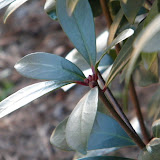
Pictures around 1005
 |
| Pictures around 1005 |
Its amazing the beauty that is so close to home. I took these pictures as I went for a brief walk around the block. Alli's camera (Fuji S2000HD) has great macro capabilities.
Sunday, January 17, 2010
The Earthquake in Haiti: A Christian Response
On Tuesday, January 12, 2010 at 16:53 EST a massive earthquake of magnitude 7.0 struck
In the aftermath of this disaster, you may have heard some Christians say that the earthquake was the Haitian people’s punishment for making “a pact with the devil” when rebelling against the French colonial government 200 years ago. While it has the appearance of justice, the claim is both biblically and historically flawed. I argue that the New Testament does not teach that God exacts temporal judgment. I also appeal to the majority of historical scholarship, which shows that
The idea that God executes earthly judgment for an individual or group’s sin is directly contrary to the core teaching of Christianity – the gospel. Don’t get me wrong, there are definitely negative consequences for wrong choices and bad actions, which Paul explains in Galatians 6:7-8 with the principle of sowing and reaping. And there is no question that sin is contrary to the very nature of God and rightly requires punishment. However, the Bible teaches that Jesus’ death provided full forgiveness for the wrongdoing of every person. Specifically, his death was a “propitiation” for sin (Romans 3:21-26). In this passage, the Greek word hilasmos contains the sense that Jesus was an “offering satisfying God’s wrath toward sin.” Isaiah 53:6, referring to Christ, states that “the Lord has punished Him for the iniquity of us all.” If Jesus took all of the punishment for all of our sin (once and for all), then it would be a contradiction to state that God continues to punish people for their sin. Furthermore, God’s love toward us is perfect and 1 John 4:18 states that “perfect love drives out fear, because fear has to do with punishment.” In His mercy and grace, God has provided a way for humans to have relationship with Him through placing the punishment that sin deserves on Christ. Biblically, the conclusion that the earthquake in
Neither does historical evidence show that the original Haitian revolutionaries made a pact with the devil. Before independence,
As a Christian, I am angered and saddened when high-profile Christian “leaders” make such statements as the one that inspired this essay. No matter who says what, we would all do well to heed scripture’s teaching to “test everything [and] hold on to the good” (1 Thessalonians 5:21).
Before the earthquake,
Thursday, January 14, 2010
ACP Health Care Reform Email
Here's a copy of an email from the American College of Physician's about the current legislation. They mention that much of it still needs work, but ultimately they are favor of the bill.
Thursday, January 7, 2010
Article by Atul Gawande in New Yorker
Atul Gawande is a surgeon who teaches/practices at Harvard Medical School. He recently wrote a piece in the New Yorker that was very intriguing. Basically, Medicare costs per enrollee are more than twice as high in McAllen, Texas compared to the national average, but health outcomes and quality of care are not better. On the whole, physicians are ordering more tests, scheduling more office visits, and performing more procedures in McAllen, driving up the costs of health care. The pattern in McAllen reflects the plight of the US - more $$ invested in medical care per person, yet only average returns in quality. Dr. Gawande proposes local/regional accountability groups for physicians and a salary-based physician payment system modeled after the Mayo Clinic, which has Medicare costs below the national average, yet maintains high quality.
Check out the article: http://www.newyorker.com/reporting/2009/06/01/090601fa_fact_gawande
Subscribe to:
Posts (Atom)